Sjogren Syndrome Diagnosis and Evaluation

Important eye tests and blood work for early detection.

Sjogren Syndrome Diagnosis and Evaluation

Important eye tests and blood work for early detection.

Clinical Immunology focuses on the immune system’s health. Learn about the diagnosis and treatment of allergies, autoimmune diseases, and immunodeficiencies.

We're Here to Help.
Get in Touch.

Send us all your questions or requests, and our expert team will assist you.
Doctors

Diagnosis and Tests

image 13 22 LIV Hospital

Diagnosing Sjögren syndrome can be challenging because dryness is a common symptom in many people. To confirm the disease, doctors need to do specific tests to show it is caused by autoimmunity. At Liv Hospital, we use guidelines from the American College of Rheumatology and the European League Against Rheumatism. Diagnosis involves blood tests, eye exams, tests of gland function, and sometimes looking at tissue under a microscope.

Icon LIV Hospital

Serological Markers: The Antibody Profile

image 14 28 LIV Hospital

Anti-SSA (Ro) and Anti-SSB (La)

Blood tests are the first step. The presence of anti-SSA (Ro) antibodies is the most heavily weighted criterion for diagnosis.

  • Anti-SSA (Ro): Found in approximately 60-70% of patients. It is strongly associated with early onset, longer disease duration, and extraglandular manifestations.
  • Anti-SSB (La): Usually found in conjunction with anti-SSA. Isolated anti-SSB is rare.
  • These antibodies attack certain proteins in the body and help confirm that the dryness is due to an autoimmune problem. However, about 30-40% of people with Sjögren syndrome do not have these antibodies, so they are called ‘seronegative.’

Non-Specific Inflammatory Markers

  • Antinuclear Antibody (ANA): Positive in up to 80% of patients, but non-specific as it appears in many autoimmune diseases.
  • Rheumatoid Factor (RF): Often positive, even in patients without Rheumatoid Arthritis. High titers of RF are associated with more severe glandular damage.
  • Hypergammaglobulinemia: Elevated levels of IgG antibodies are common, reflecting the overactivity of B-cells.
  • Cryoglobulins: Proteins that clump in the cold may be present in patients with vasculitis and are a risk marker for lymphoma.
Icon 1 LIV Hospital

Ocular Diagnostic Tests

image 15 26 LIV Hospital

Quantifying Tear Production and Quality

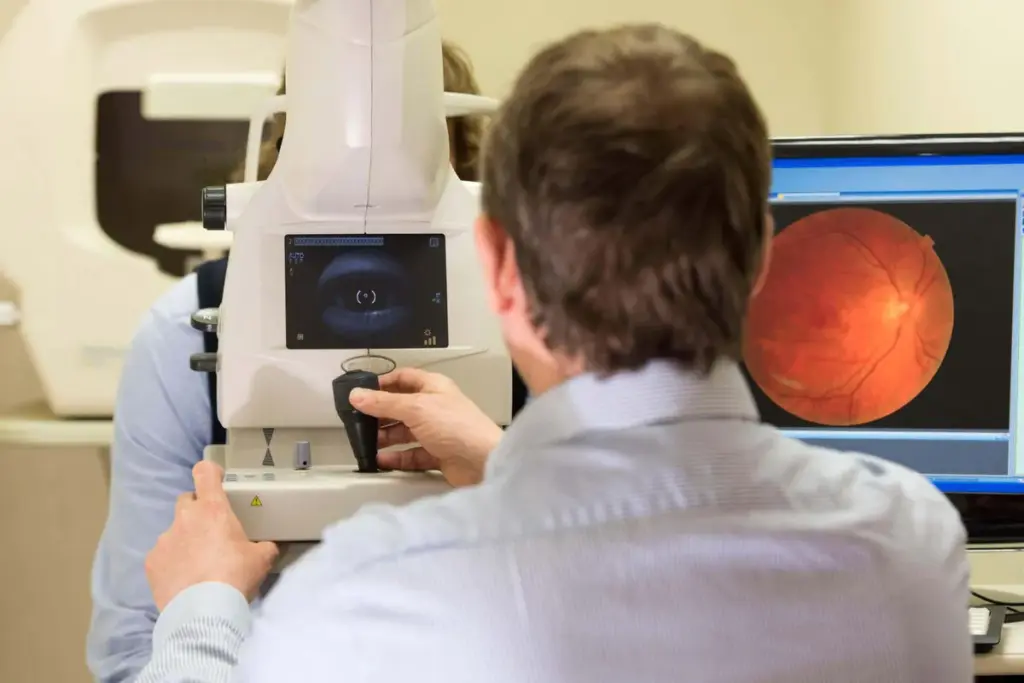
Ophthalmologists use specific tests to objectify dry eye symptoms.
  • Schirmer’s Test: A standardized strip of filter paper is placed in the lower conjunctival sac. After 5 minutes, the length of the wet portion is measured. A result of less than 5mm indicates severe aqueous deficiency consistent with Sjögren syndrome.
  • Ocular Staining Score (OSS): Vital dyes like Lissamine Green and Fluorescein are instilled in the eye. Lissamine Green stains dead or degenerated cells on the conjunctiva, while Fluorescein highlights damage to the cornea. The pattern and density of staining are scored. A high score indicates significant ocular surface damage due to dryness.
  • Tear Break-up Time (TBUT): This measures the stability of the tear film. A fast break-up time suggests the tears are evaporating too quickly or are of poor quality.

Salivary Gland Assessment

image 16 23 LIV Hospital

Functional Measurements

  • Sialometry: This measures the actual volume of saliva produced. The gold standard is the unstimulated whole saliva flow rate. The patient passively drools into a pre-weighed container for 15 minutes. A flow rate of less than 0.1 mL/min is considered pathological.
  • Salivary Scintigraphy: A nuclear medicine imaging study. Technetium-99m pertechnetate is injected intravenously. A gamma camera records the uptake of the tracer by the salivary glands and its subsequent excretion into the mouth. Delayed uptake or excretion indicates glandular dysfunction.

Structural Imaging

  • Sialography: Contrast dye is injected into the salivary ducts, followed by X-rays. It can show dilations and strictures (narrowing) of the ducts, often described as a “string of beads” or “cherry blossom” appearance.
  • Ultrasound: Doctors can use high-resolution ultrasound to look at the parotid and submandibular glands without using radiation. In Sjögren syndrome, these glands look uneven and have dark areas, which shows tissue damage. Ultrasound is now often used as a first test for diagnosis.
IMMUNOLOGY

Histopathology: Minor Salivary Gland Biopsy

image 17 21 LIV Hospital

The Gold Standard

When serology is negative or the diagnosis is unclear, a lip biopsy is performed.

  • Procedure: Under local anesthesia, a small incision is made on the inner aspect of the lower lip. 5-7 minor salivary glands are harvested.
  • Histological Analysis: The pathologist looks for “focal lymphocytic sialadenitis.” The key metric is the Focus Score.
  • Focus Score Calculation: A focus is defined as a cluster of at least 50 lymphocytes. The score is the number of foci per 4 square millimeters of glandular tissue. A Focus Score of ≥1 is considered positive for Sjögren syndrome.
  • Utility: The biopsy not only confirms diagnosis but can also assess the severity of inflammation and rule out other diseases like sarcoidosis or amyloidosis.

Differential Diagnosis

Ruling Out Mimics

The diagnosis is a diagnosis of exclusion. Many conditions mimic Sjögren syndrome.

  • Age-Related Sicca: Dryness is a natural part of aging, but usually without the specific antibodies or inflammatory biopsy.
  • IgG4-Related Disease: A systemic condition that causes gland enlargement and fibrosis, distinguishable by high IgG4 levels in blood and tissue.
  • Hepatitis C: Chronic Hep C infection can cause lymphocytic infiltration of glands, but the pattern is different (often peri-ductal rather than focal).
  • Sarcoidosis: Causes gland swelling and dryness but shows non-caseating granulomas on biopsy rather than lymphocytic foci.
  • Medication Effect: Hundreds of drugs, including antidepressants, antihistamines, and anticholinergics, cause dry mouth and eyes as a side effect.

Emerging Diagnostic Technologies

image_18

Novel Biomarkers

Research is ongoing to identify new non-invasive markers.

  • Salivary Proteomics: Analyzing the proteins present in saliva to find specific inflammatory signatures.
  • Calprotectin: Fecal and serum calprotectin levels are being investigated as markers of disease activity.
  • Early Detection: The aim is to find the disease before major gland damage happens, using sensitive ultrasound and new blood tests for autoantibodies.

30
Years of
Excellence

Trusted Worldwide

With patients from across the globe, we bring over three decades of medical expertise and hospitality to every individual who walks through our doors.  

Book a Free Certified Online Doctor Consultation

Doctors

Table of Contents

We're Here to Help.
Get in Touch.

Send us all your questions or requests, and our expert team will assist you.

Doctors

FREQUENTLY ASKED QUESTIONS

Why is the lip biopsy necessary?

It allows doctors to see the actual immune attack in the tissue. For patients who test negative for antibodies in the blood, the biopsy is the only way to prove the disease exists.

It can be slightly irritating as the paper touches the eye, but it is not painful and is over in five minutes.

A positive ANA suggests an autoimmune process, but it is not specific to Sjögren’s. It must be interpreted alongside Anti-SSA/SSB tests and clinical symptoms.

MRI is excellent for evaluating glandular structure and ruling out tumors, but it is typically reserved for complex cases or when lymphoma is suspected.

Unfortunately, the average time to diagnosis is several years because symptoms are often dismissed. Seeing a rheumatologist early is key to speeding up this process.

Spine Hospital of Louisiana

Let's Talk About Your Health

BUT WAIT, THERE'S MORE...

Leave your phone number and our medical team will call you back to discuss your healthcare needs and answer all your questions.

Let's Talk About Your Health

Contact Us to Get Information!

Contact
Your Comparison List (you must select at least 2 packages)